Embark on a journey exploring Customer Market Research Techniques, delving into the realm of consumer behavior and market trends with a fresh perspective.
Discover the tools and strategies companies use to gain a deeper understanding of their target audience and stay ahead in the competitive market landscape.
Overview of Customer Market Research Techniques
Customer market research techniques play a vital role in helping businesses understand their target audience and make informed decisions. By gathering data and insights about consumer preferences, behaviors, and trends, companies can tailor their products and services to meet customer needs effectively.
Examples of Customer Market Research Techniques
- Surveys: Companies often use surveys to collect feedback from customers about their satisfaction levels, preferences, and buying habits.
- Focus Groups: Organizing focus groups allows businesses to have in-depth discussions with a small group of customers to gather qualitative insights.
- Observational Research: By observing customer behavior in real-life settings, companies can understand how consumers interact with their products or services.
- Data Analysis: Utilizing data analytics tools helps in analyzing customer data to identify patterns and trends that can guide marketing strategies.
Understanding Consumer Behavior through Market Research
Customer market research techniques are instrumental in deciphering consumer behavior by providing valuable information on why customers make specific purchasing decisions. By conducting market research, businesses can gain insights into consumer motivations, preferences, and pain points, enabling them to develop targeted marketing campaigns and product innovations.
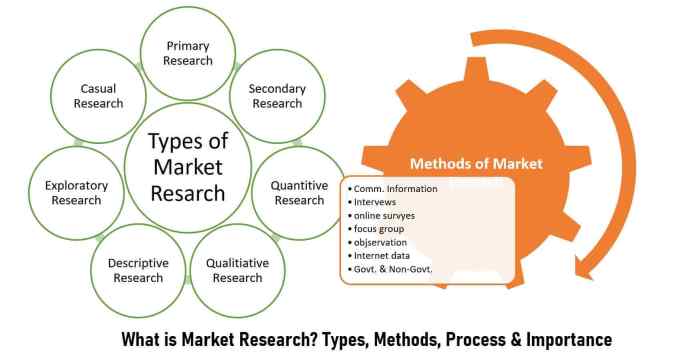
Types of Market Research Methods
Market research methods can be categorized into primary and secondary research, as well as quantitative and qualitative methods. Each method has its own set of advantages and disadvantages that should be considered when conducting customer market research.
Primary Research Methods
Primary research involves collecting data directly from customers through surveys, interviews, focus groups, or observations. This method allows businesses to gather specific and targeted information about customer preferences, behaviors, and opinions. It provides fresh and firsthand data that is relevant to the current market conditions.
- Surveys: Questionnaires distributed to a sample of customers to gather feedback on products, services, or brand perceptions.
- Interviews: One-on-one conversations with customers to delve deeper into their thoughts and feelings about a product or service.
- Focus Groups: Small groups of customers brought together to discuss and provide feedback on specific products or services.
- Observations: Directly observing customer behavior in real-life settings to understand preferences and decision-making processes.
Secondary Research Methods
Secondary research involves analyzing existing data sources such as industry reports, market studies, competitor analysis, and customer feedback. This method allows businesses to leverage information that has already been collected by other sources, saving time and resources.
- Industry Reports: Reports published by research firms that provide insights into market trends, consumer behavior, and competitive analysis.
- Competitor Analysis: Studying the strategies and performance of competitors to identify market opportunities and threats.
- Customer Feedback: Analyzing reviews, ratings, and comments on social media platforms or review sites to understand customer sentiments.
Quantitative vs. Qualitative Research Methods
Quantitative research focuses on numerical data and statistical analysis to measure customer preferences and behaviors objectively. On the other hand, qualitative research explores customer attitudes, motivations, and perceptions through open-ended questions and discussions.
- Quantitative Research: Surveys, questionnaires, and experiments that provide measurable data for statistical analysis and trend identification.
- Qualitative Research: Focus groups, interviews, and observations that delve into the emotions, opinions, and experiences of customers to gain deeper insights.
Advantages and Disadvantages
Both quantitative and qualitative research methods have their own strengths and limitations. Quantitative research offers statistical validity and generalizability but may lack depth and context. Qualitative research provides rich insights and understanding but can be subjective and time-consuming.
- Advantages of Quantitative Research: Objectivity, large sample sizes, statistical analysis, and generalizability.
- Disadvantages of Quantitative Research: Lack of depth, limited context, and inability to capture nuances or emotions.
- Advantages of Qualitative Research: Rich insights, in-depth understanding, and exploration of complex human behaviors.
- Disadvantages of Qualitative Research: Subjectivity, small sample sizes, time-consuming analysis, and potential bias.
Implementing Customer Market Research Techniques

When it comes to conducting effective customer market research, there are several key steps that need to be followed in order to gather accurate and valuable insights.
Steps for Conducting Effective Customer Market Research:
- Define your objectives: Clearly Artikel what you want to achieve through the market research and what specific information you are looking to gather.
- Identify your target audience: Determine who your ideal customers are and tailor your research efforts towards understanding their needs and preferences.
- Choose the right research methods: Select the most appropriate methods such as surveys, interviews, focus groups, or data analysis to gather the required information.
- Create your survey or questionnaire: Develop questions that are clear, concise, and directly related to your research objectives to ensure meaningful responses.
- Collect and analyze data: Gather responses from your target audience and use statistical analysis tools to interpret the data accurately.
- Draw actionable insights: Extract valuable insights from the data collected to make informed decisions and improve your marketing strategies.
Tips for Designing Surveys and Questionnaires for Market Research:
- Keep it simple: Use clear and straightforward language to ensure respondents understand the questions easily.
- Avoid leading questions: Formulate questions in an unbiased manner to prevent influencing respondents’ answers.
- Include a mix of question types: Use a combination of multiple-choice, open-ended, and rating scale questions to gather diverse insights.
- Test before deployment: Pilot test your survey with a small sample group to identify any potential issues or confusion before launching it to a larger audience.
How to Analyze and Interpret Market Research Data Accurately:
- Organize the data: Structure the collected data in a meaningful way to facilitate analysis and identify patterns or trends.
- Utilize data analysis tools: Use software tools such as SPSS, Excel, or Google Analytics to process and analyze the data efficiently.
- Look for correlations: Identify relationships between different variables to uncover valuable insights and make informed decisions.
- Present findings clearly: Communicate your research findings in a visually appealing and easy-to-understand format to stakeholders and decision-makers.
Market Analysis and Volatility
Market analysis plays a crucial role in understanding industry trends and making informed decisions. By examining various factors affecting a particular market, businesses can anticipate changes and plan accordingly.
Significance of Market Analysis
Market analysis helps businesses identify opportunities and threats in the market, allowing them to adjust their strategies to stay competitive. By analyzing market trends, consumer behavior, and competitor activities, companies can make informed decisions to drive growth and innovation.
Impact of Market Volatility on Customer Behavior
- Market volatility, characterized by rapid and unpredictable changes in market conditions, can significantly influence customer behavior and preferences.
- During periods of market instability, customers may become more cautious with their spending, leading to shifts in purchasing patterns and brand loyalty.
- Companies need to closely monitor market volatility to understand its impact on consumer sentiment and adjust their marketing strategies accordingly.
Utilizing Market Analysis to Adapt to Changing Market Conditions
- Companies use market analysis to identify emerging trends, predict consumer demands, and assess competitive landscapes.
- By analyzing market data and customer feedback, businesses can make strategic decisions to introduce new products, adjust pricing strategies, or target specific market segments.
- For example, a retail company may use market analysis to identify shifts in consumer preferences and adjust their product offerings to meet changing demands.
As we conclude our discussion on Customer Market Research Techniques, remember that unlocking consumer insights is key to driving business success and innovation in today’s dynamic market environment.
Helpful Answers
How do customer market research techniques benefit businesses?
Customer market research techniques provide valuable insights into consumer preferences, behaviors, and market trends, enabling businesses to make informed decisions and tailor their strategies effectively.
What are the key differences between quantitative and qualitative market research methods?
Quantitative research methods involve numerical data and statistical analysis, while qualitative methods focus on gathering insights and understanding underlying reasons behind consumer behavior through open-ended questions and observations.
How can companies effectively analyze market research data?
Companies can analyze market research data by identifying patterns, trends, and correlations, and translating these findings into actionable strategies that align with their business objectives and target audience needs.


