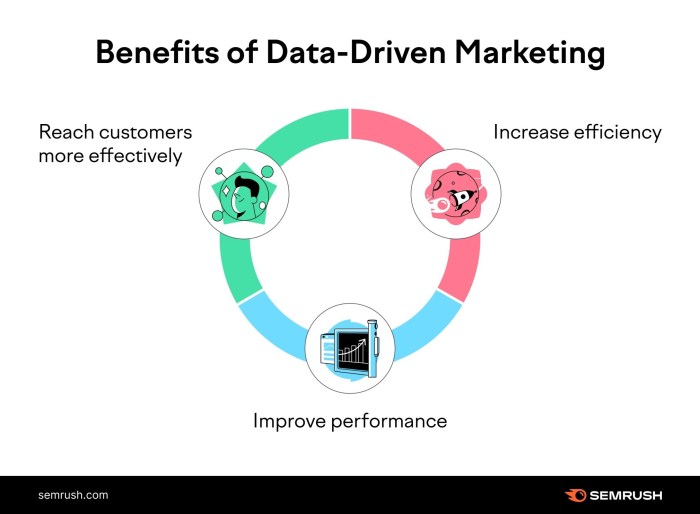
Dive into the world of Data-Driven Market Research Insights, where data transforms market analysis into a strategic powerhouse. Explore how companies harness the power of data to make informed decisions and stay ahead of the competition.
Discover the impact of real-time data collection, predictive modeling, and data analytics on market volatility analysis. Uncover the secrets of successful market research strategies driven by data.
Overview of Data-Driven Market Research Insights

Data-driven market research insights play a crucial role in today’s business landscape, providing companies with valuable information to make informed decisions and stay ahead of the competition.
By incorporating data-driven insights into market research, businesses can gain a deeper understanding of consumer behavior, trends, and preferences. This allows companies to tailor their products and services to meet the needs of their target audience more effectively.
Importance of Data-Driven Approaches in Market Analysis
- Data-driven approaches improve decision-making processes by providing accurate and up-to-date information for analysis. This helps businesses identify market opportunities, track competitors, and optimize their marketing strategies.
- Utilizing data-driven insights enables companies to measure the impact of their marketing campaigns, gauge customer satisfaction, and identify areas for improvement in product development.
- Companies can also use data-driven market research to anticipate market trends, forecast demand, and make strategic decisions based on real-time data rather than assumptions or guesswork.
Examples of Successful Companies Leveraging Data-Driven Market Research Insights
- Amazon: By analyzing customer data and purchase history, Amazon offers personalized recommendations and targeted marketing campaigns to enhance the shopping experience.
- Netflix: Netflix uses data-driven insights to recommend movies and TV shows based on user preferences, viewing history, and behavior patterns, increasing user engagement and retention.
- Uber: Uber utilizes data analytics to optimize pricing strategies, route planning, and driver allocation, improving efficiency and customer satisfaction.
Utilizing Data Analytics in Market Research
Data analytics plays a crucial role in extracting valuable insights for market analysis by leveraging data to uncover trends, patterns, and correlations that may not be immediately apparent through traditional methods.
When comparing traditional market research methods with data-driven approaches, the latter relies on the analysis of large datasets to identify consumer behaviors, preferences, and market trends. Data analytics enables businesses to make informed decisions based on quantitative data rather than relying solely on qualitative research or intuition.
Key Performance Indicators (KPIs) in Data-Driven Market Research
- Customer Acquisition Cost (CAC): This KPI measures the cost of acquiring a new customer and helps businesses evaluate the effectiveness of their marketing strategies.
- Customer Lifetime Value (CLV): CLV calculates the total revenue a business can expect from a customer throughout their relationship. It helps in understanding the long-term value of customers and guides marketing efforts accordingly.
- Conversion Rate: Conversion rate tracks the percentage of website visitors or leads that take a desired action, such as making a purchase. This KPI indicates the effectiveness of marketing campaigns and website optimization.
- Churn Rate: Churn rate measures the percentage of customers who stop using a product or service over a specific period. It is essential for businesses to monitor churn rate to identify factors affecting customer retention.
Real-time Data Collection for Market Volatility Analysis
In today’s fast-paced market environment, real-time data collection plays a crucial role in analyzing market volatility and making informed decisions. By leveraging real-time data, companies can gain valuable insights into rapidly changing market conditions and stay ahead of the competition.
Strategies for Collecting Real-time Data
- Utilize automated data collection tools: Implement software that can continuously gather data from various sources in real-time.
- Monitor social media platforms: Track customer sentiment and market trends by monitoring social media conversations and interactions.
- Utilize IoT devices: Collect real-time data from IoT devices to understand consumer behavior and preferences.
Challenges and Benefits of Using Real-time Data
While real-time data offers numerous benefits, such as faster decision-making and improved accuracy, it also presents challenges:
- Challenge: Data overload can lead to information paralysis and decision-making delays.
- Benefit: Real-time data allows for quick identification of market trends and opportunities.
- Challenge: Ensuring data accuracy and reliability can be a major hurdle in real-time data collection.
- Benefit: Real-time data enables businesses to respond swiftly to market changes and customer demands.
Impact of Real-time Data on Decision-making
Real-time data provides decision-makers with up-to-the-minute insights, allowing them to:
- Respond quickly to market fluctuations and make timely adjustments to strategies.
- Identify emerging trends and capitalize on new opportunities before competitors.
- Minimize risks by staying informed about potential threats and challenges in the market.
Predictive Modeling in Market Research
Predictive modeling plays a crucial role in market research by utilizing statistical algorithms and machine learning techniques to forecast future trends and outcomes based on historical data. This allows businesses to make informed decisions and develop effective strategies to stay ahead of the competition.
Types of Predictive Models in Market Research
- Linear Regression: A common predictive model used to establish relationships between variables and predict numerical values, such as sales figures or market demand.
- Time Series Analysis: Predicts future values based on historical data patterns, especially useful for forecasting trends over time in markets with seasonality.
- Machine Learning Algorithms: Techniques like Random Forest, Gradient Boosting, and Neural Networks are used to analyze large datasets and predict market behavior with high accuracy.
Accuracy and Limitations of Predictive Modeling
- Predictive models can provide valuable insights and help businesses anticipate market changes, leading to more effective decision-making and improved performance.
- However, the accuracy of predictions heavily relies on the quality of data and the appropriateness of the chosen model. Inaccurate or biased data can lead to flawed predictions.
- Another limitation is the inability to account for unforeseen events or black swan events, which can significantly impact market dynamics and render predictions obsolete.
In conclusion, Data-Driven Market Research Insights offer a competitive edge in today’s dynamic market landscape. Embrace the power of data to unlock valuable insights and drive strategic decision-making that propels your business towards success.
Frequently Asked Questions
How can data-driven insights enhance market research?
By leveraging data-driven approaches, businesses gain deeper insights into consumer behavior, market trends, and competition, enabling informed decision-making.
What are some examples of key performance indicators (KPIs) in data-driven market research?
KPIs like customer acquisition cost, customer lifetime value, and conversion rates are commonly used to measure the effectiveness of data-driven market research strategies.
How does real-time data collection impact decision-making during market volatility?
Real-time data allows businesses to respond swiftly to changing market conditions, enabling agile decision-making and proactive risk management strategies.
What are the limitations of predictive modeling in market analysis?
While predictive modeling can forecast market trends with accuracy, it may face challenges in predicting unpredictable events or black swan events that significantly impact markets.


