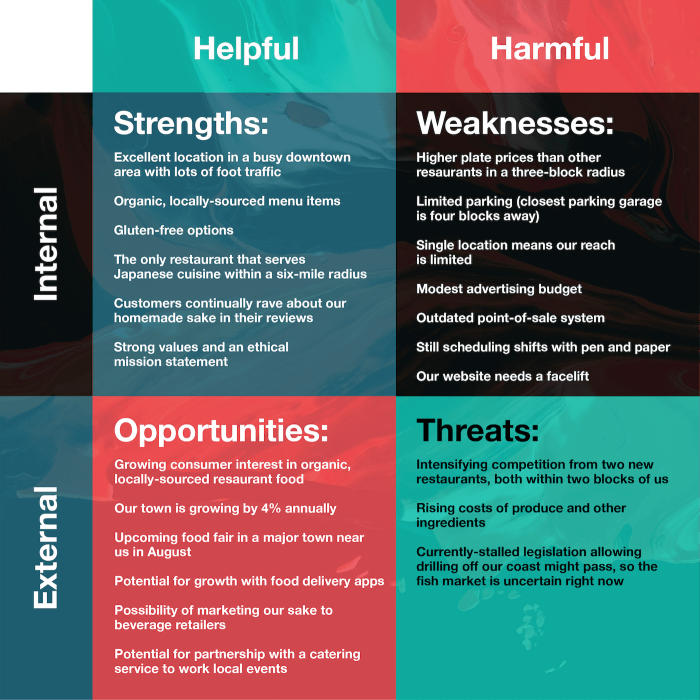
SWOT Analysis in Market Research sets the stage for this enthralling narrative, offering readers a glimpse into a story that is rich in detail with casual formal language style and brimming with originality from the outset.
Exploring the purpose, significance, and impact of SWOT analysis in market research provides a comprehensive view of how businesses can strategize effectively in a dynamic market landscape.
SWOT Analysis in Market Research
SWOT analysis is a strategic planning tool used to identify and evaluate the Strengths, Weaknesses, Opportunities, and Threats involved in a business venture or project. When applied to market research, SWOT analysis plays a crucial role in understanding the internal and external factors that can impact a company’s performance.
Purpose of Conducting a SWOT Analysis in Market Research
SWOT analysis in market research helps companies gain insights into their competitive position, market trends, and potential growth opportunities. By assessing strengths, weaknesses, opportunities, and threats, organizations can make informed decisions and develop effective strategies to achieve their business objectives.
Identifying Strengths in Market Research through SWOT Analysis
Identifying strengths in market research through SWOT analysis allows companies to leverage their competitive advantages, unique capabilities, and resources. Recognizing strengths enables organizations to capitalize on their positive attributes to gain a competitive edge, enhance brand reputation, and attract target customers.
Impact of Weaknesses Identified in a SWOT Analysis on Market Research Strategies
Weaknesses identified in a SWOT analysis can hinder a company’s market research strategies by highlighting areas that need improvement, such as operational inefficiencies, limited product offerings, or poor brand perception. Addressing weaknesses is essential for companies to overcome challenges, mitigate risks, and enhance their market competitiveness.
Role of Opportunities in Market Research Revealed by SWOT Analysis
Opportunities identified in a SWOT analysis provide companies with valuable insights into emerging market trends, consumer needs, and untapped market segments. By exploring opportunities, organizations can develop innovative products, expand into new markets, and capitalize on favorable external factors to drive growth and profitability.
Market Analysis

Market analysis is a crucial component of market research that involves evaluating the attractiveness and dynamics of a specific market. It helps businesses understand the current market landscape and make informed decisions to enhance their competitive advantage.
Data Sources Used in Market Analysis
Market analysis relies on various data sources to gather insights and information. Some common examples include:
- Government publications and reports
- Industry surveys and studies
- Financial reports and statements
- Customer feedback and surveys
- Competitor websites and social media
Qualitative vs. Quantitative Approaches in Market Analysis
When conducting market analysis, both qualitative and quantitative approaches are utilized to gain a comprehensive understanding of the market. Here’s a comparison:
- Qualitative analysis involves non-numerical data, such as customer feedback and expert opinions, to provide insights into market trends and consumer behavior.
- Quantitative analysis, on the other hand, focuses on numerical data, such as sales figures and market share, to quantify market size and assess performance metrics.
Competitor Analysis Process
Competitor analysis within market research involves evaluating the strengths and weaknesses of competitors to identify opportunities and threats in the market. The process typically includes:
- Identifying key competitors in the market
- Analyzing competitors’ products, pricing, and marketing strategies
- Assessing competitors’ market share and customer base
- Comparing competitors’ strengths and weaknesses against your own business
Market Trends Analysis and Incorporation
Analyzing market trends is essential for businesses to stay competitive and adapt to changing consumer preferences. Market trends are identified through:
- Monitoring industry publications and reports
- Tracking consumer behavior and preferences
- Assessing technological advancements and innovations
- Conducting surveys and market research studies
Market Volatility
Market volatility refers to the degree of variation and unpredictability in the prices of goods and services within a market. This volatility can be influenced by various factors such as economic conditions, political events, consumer behavior, and technological advancements. In the context of market research, understanding and adapting to market volatility is crucial for making informed business decisions.
Impact of Market Volatility on Market Research
Market volatility can significantly impact market research by affecting the accuracy and reliability of data collected. Fluctuations in market conditions can lead to rapid changes in consumer preferences, buying patterns, and competitive landscapes, making it challenging to obtain up-to-date and relevant information. As a result, market researchers need to implement strategies to navigate through these uncertainties effectively.
Strategies for Handling Market Volatility in Market Research
- Conducting frequent market assessments: Regularly monitoring market trends and conditions can help researchers stay informed about changes and adjust their research strategies accordingly.
- Utilizing advanced analytics tools: Leveraging data analytics and predictive modeling can help researchers anticipate market shifts and identify potential opportunities or threats.
- Diversifying data sources: Relying on a variety of sources for data collection can provide a more comprehensive and accurate understanding of the market, reducing the impact of volatility.
- Staying flexible and adaptable: Being open to adjusting research methodologies and approaches in response to changing market conditions is essential for effectively navigating through volatility.
Key Indicators of Market Volatility
- Economic indicators: Factors such as GDP growth, inflation rates, and interest rates can signal changes in market stability and volatility.
- Political events: Elections, policy changes, and geopolitical tensions can create uncertainty in the market and lead to increased volatility.
- Technological advancements: Innovations and disruptions in technology can impact market dynamics and contribute to volatility within industries.
- Consumer behavior: Shifts in consumer preferences, demographics, and purchasing power can influence market volatility and demand patterns.
Adapting Market Research to Changing Market Volatility
Market research must continuously evolve to adapt to changing market volatility by embracing innovative methodologies, technologies, and analytical tools. By staying agile, proactive, and responsive to market dynamics, researchers can effectively navigate through uncertainties and capitalize on emerging opportunities in volatile environments.
Market Research
Market research plays a crucial role in understanding the dynamics of the market and making informed business decisions. It involves gathering and analyzing information about consumers, competitors, and the overall industry to identify opportunities and challenges.
Types of Market Research Methodologies
Market research methodologies can vary based on the objectives of the study and the data required. Some common types include:
- Surveys: Gathering insights from a sample of the target population through structured questionnaires.
- Focus Groups: Bringing together a small group of individuals to discuss specific topics in-depth.
- Interviews: Conducting one-on-one interviews to gather detailed information from participants.
- Observational Research: Observing consumer behavior in real-world settings to understand their preferences and decision-making processes.
Significance of Consumer Behavior Analysis in Market Research
Consumer behavior analysis is essential in market research as it helps businesses understand how and why consumers make purchasing decisions. By studying factors such as buying patterns, preferences, and motivations, companies can tailor their products and marketing strategies to meet consumer needs effectively.
Segmenting Target Markets in Market Research
Segmenting target markets involves dividing the market into distinct groups based on factors such as demographics, psychographics, behavior, and geography. This allows businesses to target specific customer segments with tailored products and marketing messages, increasing the chances of success in the market.
Actionable Insights from Effective Market Research
Effective market research can provide valuable insights that drive business decisions. For example:
- Identifying emerging trends in the market and adapting product offerings accordingly.
- Understanding customer feedback to improve product quality and customer satisfaction.
- Analyzing competitor strategies to identify opportunities for differentiation and competitive advantage.
- Evaluating the effectiveness of marketing campaigns to optimize ROI and reach target audiences more effectively.
In conclusion, SWOT Analysis in Market Research emerges as a powerful tool for businesses to navigate the complexities of the market, enabling them to capitalize on strengths, mitigate weaknesses, seize opportunities, and prepare for market volatility with confidence.
Essential FAQs
What is the main purpose of conducting a SWOT analysis in market research?
The main purpose is to identify internal strengths and weaknesses, as well as external opportunities and threats, to formulate effective business strategies.
How does market volatility impact market research, and what strategies can be employed to handle it?
Market volatility can disrupt data accuracy and trends; businesses can handle it by adapting quickly, diversifying portfolios, and staying informed about market changes.
Why is consumer behavior analysis significant in market research?
Understanding consumer behavior helps businesses tailor their products and services to meet customer needs, ultimately increasing sales and market share.


